Venezuela Edible Oil Production Line: Complete Equipment and Project Guide 2026
Issacindustry
Venezuela Edible Oil Production Line: Complete Equipment and Project Guide 2026
Venezuela imports over 70% of its edible oil consumption, creating a massive domestic production opportunity. With sunflower and soybean cultivation expanding in the Orinoco region and the government prioritizing food sovereignty under CRBV regulations, domestic edible oil production is one of the most viable food processing investments in the country today.
Whether you're a Venezuelan agribusiness exploring vertical integration, an international investor evaluating refinery projects, or a regional distributor securing local supply — this guide covers everything you need to know about building an edible oil production line in Venezuela in 2026.
Why Invest in Edible Oil Production in Venezuela Now?
Three structural forces make Venezuela's edible oil sector one of the most attractive food processing opportunities in South America:
-
Import dependency: Venezuela spends approximately USD 400–500 million annually on edible oil imports. Domestic production captures this value chain.
-
Raw material proximity: The Orinoco Agricultural Belt produces sunflower (40,000+ tonnes/year) and soybean (200,000+ tonnes/year). Domestic crushing eliminates import logistics costs.
-
Price-controlled market: Edible oils are subject to price controls under Venezuelan law, making production cost efficiency critical — and competitive Chinese equipment delivers the unit economics to remain profitable under price caps.
What Is an Edible Oil Production Line?
An edible oil production line is an integrated processing system that transforms raw oilseeds (sunflower, soybean, palm) into finished cooking oil. The process chain includes: seed cleaning, dehulling, crushing, solvent extraction, refining, bleaching, deodorizing, and packaging.
For a Venezuela market-entry plant, the typical configuration targets 100–300 tonnes per day of raw seed processing, yielding 30–90 tonnes per day of finished refined oil — sufficient to serve a regional market of 2–5 million consumers.
Key Equipment in an Edible Oil Production Line
1. Seed Cleaning and Preparation
Before any processing, raw seeds must be cleaned and conditioned. The cleaning section removes impurities: stones, hulls, dust, and foreign material. A typical cleaning line includes:
-
Magnetic separator — removes metal impurities
-
Vibrating screen — separates by particle size
-
Dehuller — shells sunflower seeds (hull content 22–28% must be removed before crushing)
-
Conditioning cooker — steam-heats seeds to 60–70°C to increase oil extraction yield by 8–12%
Skipping proper cleaning reduces extraction efficiency and increases wear on downstream equipment. Budget USD 30,000–80,000 for a complete cleaning section.
2. Oilseed Crushing — Mechanical Press
The first-stage oil extraction uses screw presses (expellers) to mechanically press oil from preconditioned seeds. Screw press extraction yields 65–75% of total oil; the remainder requires solvent extraction.
A typical configuration includes:
-
Pre-heating kettle — brings seed temperature to optimal 65–75°C
-
Single-stage or double-stage screw press — processes 30–100 tonnes/day of sunflower or soybean
-
Filter press — clarifies crude oil from solids
Screw press extraction is preferred for small-to-medium scale plants (under 500 tonnes/day) due to lower capital cost, simpler operation, and produces "cold-pressed" oil for premium market segments.
3. Solvent Extraction (for High-Yield Operations)
To extract the remaining 25–35% of oil from the pressed cake, solvent extraction uses food-grade hexane to dissolve residual oil. This is standard for medium-to-large scale operations above 200 tonnes/day.
Key equipment:
-
Extractor — flooded or Dr. type, processes pre-pressed cake
-
Desolventizer-toaster (DT) — removes hexane from marc using indirect steam heating
-
Condenser + solvent recovery system — recaptures 95%+ of hexane for reuse
-
Miscella system — handles solvent-oil mixture for evaporation and condensation
Solvent extraction increases total oil yield to 95–98% but requires significant capital investment (USD 200,000–600,000 for a 200-tonne/day system) and strict safety protocols for hexane handling.
4. Oil Refining Section
Crude oil from extraction contains phospholipids, free fatty acids, pigments, and odor compounds. Refining transforms crude oil into clear, stable, shelf-ready cooking oil. The refining process has four stages:
Degumming: Removes phospholipids and gums using water or phosphoric acid addition. For sunflower and soybean oil, acid degumming followed by alkali refining is standard. Investment: USD 20,000–50,000 for a 100-tonne/day degumming system.
Neutralization (Alkali Refining): Removes free fatty acids (FFA) using caustic soda (NaOH) solution. FFA content drops from 1–3% to under 0.05%. This step also removes some pigment and soap stock. Investment: USD 15,000–40,000.
Bleaching: Activated earth (10–20 kg/tonne of oil) adsorbs chlorophyll, carotenoid pigments, and oxidation products. Produces the light color expected in commercial sunflower oil. Investment: USD 25,000–60,000.
Deodorization: High-temperature steam (220–260°C, under vacuum) strips volatile odor compounds including aldehydes, ketones, and pesticide residues. This is the final step before packaging. Investment: USD 40,000–100,000 for a 100-tonne/day deodorizer.
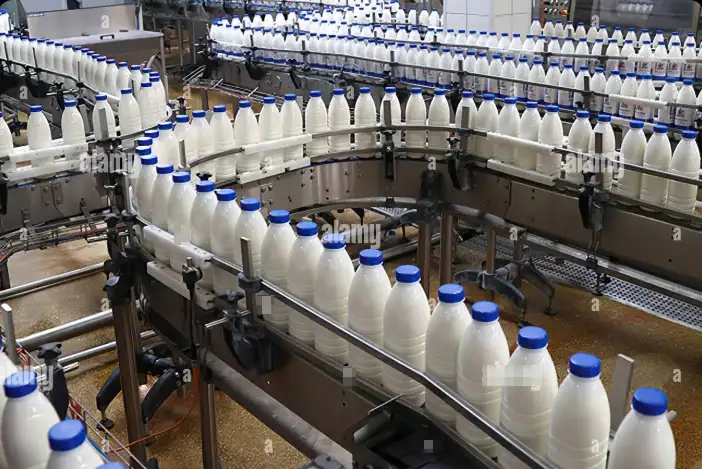
5. Filling and Packaging Line
Finished refined oil is filled into retail containers. Standard formats for Venezuela market:
-
Bulk: 18–20L tins for food service and restaurant supply
-
Retail: 900ml, 1.8L, and 4L plastic bottles for supermarket shelves
-
Industrial: 200L drums for B2B food manufacturing customers
A semi-automatic filling line for 1.8L bottles operates at 800–1,200 bottles/hour. Investment: USD 50,000–150,000 depending on automation level.
Capacity Planning: Edible Oil Line Sizing for Venezuela
Sizing your production line correctly is the most important engineering decision. Overbuilding creates fixed cost burdens; underbuilding loses market share.
-
Small: 30–50 tonnes/day raw seed → 10–18 tonnes/day refined oil → local municipality/regional market → USD 250,000–500,000
-
Medium: 100–200 tonnes/day raw seed → 35–70 tonnes/day refined oil → state-wide/multi-state market → USD 500,000–1,200,000
-
Large: 300–500 tonnes/day raw seed → 100–180 tonnes/day refined oil → national distribution → USD 1,500,000–3,000,000
For Venezuela market entry, a 100–200 tonne/day configuration is optimal — large enough to achieve unit economics that compete with imports, small enough to absorb demand risk in a price-controlled market.
2026 Cost Breakdown: Venezuela Edible Oil Production Line
-
Seed cleaning + dehulling: USD 30,000–80,000
-
Screw press (single or double stage): USD 40,000–120,000
-
Solvent extraction system (for 200+ tonne/day): USD 200,000–600,000
-
Refining system (degumming + neutralization + bleaching + deodorization): USD 120,000–350,000
-
Filling + packaging line: USD 60,000–180,000
-
Utilities + installation: 15–20% of equipment cost
-
Civil works + site preparation: USD 40,000–150,000 (depending on existing infrastructure)
Total for 100-tonne/day sunflower/soybean line: USD 450,000–900,000 (turnkey, Chinese supplier)
Total for 200-tonne/day line: USD 800,000–1,600,000 (turnkey, Chinese supplier)
Compared to European suppliers at 2–3x the price, Chinese turnkey packages deliver 40–55% cost savings with equivalent or better process performance for sunflower and soybean oil applications.
Project Timeline: From Concept to First Production
-
Month 1–2: Feasibility study, raw material sourcing analysis (Orinoco region sunflower vs. imported soybean), market demand validation, site selection
-
Month 3–4: Equipment specification finalization, supplier evaluation,